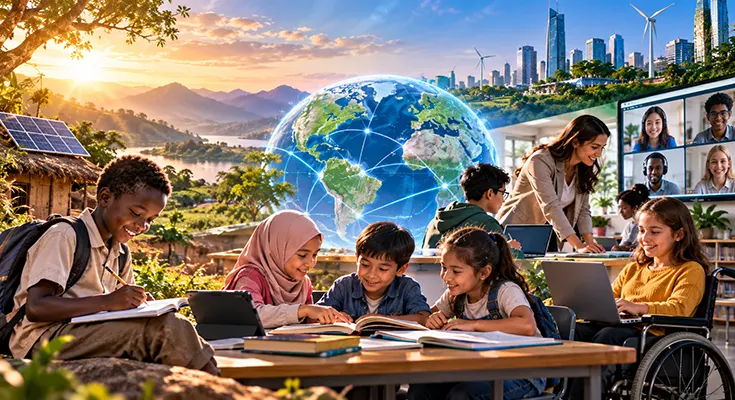
Education is a fundamental driver of social progress, economic development, and global equality. However, millions of learners worldwide continue to face barriers to quality education because of poverty, geographical isolation, disability, conflict, and limited access to technology. Building sustainable and equitable education systems for the future requires more than expanding school enrollment. It involves creating inclusive learning environments, strengthening educational infrastructure, addressing the digital divide, and preparing students for rapidly changing social and economic conditions. International initiatives, including UNESCO’s Futures of Education work and the United Nations Sustainable Development Goals (SDGs), provide important frameworks for rethinking education. By combining inclusive policies, innovative teaching practices, and long-term investment, governments and communities can help ensure that every learner has meaningful opportunities to succeed.
Expanding Global Access to Quality Education
Global access to education remains a major challenge, particularly for children and young people living in disadvantaged communities. Financial hardship, inadequate school facilities, teacher shortages, discrimination, and long travel distances can prevent learners from attending school regularly or completing their education.
Addressing these barriers requires coordinated action from governments, educational institutions, nonprofit organizations, and local communities. Governments can improve access by investing in affordable schooling, providing financial assistance, strengthening teacher recruitment, and developing accessible learning environments for students with disabilities.
Flexible educational pathways are also important. Community-based learning centers, alternative education programs, vocational training, and adult education initiatives can support people who have missed traditional schooling opportunities.
Equitable education does not mean providing identical resources to every learner. Instead, it means ensuring that students receive the support they need to participate and progress. For example, rural schools may require additional transportation services, while disadvantaged urban communities may benefit from school meal programs, counseling, and targeted academic support.
By addressing the underlying causes of educational inequality, countries can build systems that provide more learners with opportunities for lifelong learning.
Bridging the Digital Divide in Education
Digital technology offers opportunities to expand educational access through online courses, interactive resources, virtual classrooms, and personalized learning platforms. Nevertheless, the digital divide continues to limit these benefits for many students.
The divide includes more than the absence of computers or internet connections. It also involves differences in digital literacy, accessibility, affordability, language support, and the availability of relevant educational content.
Sustainable digital education strategies should combine infrastructure investment with practical support. Governments and education providers can expand affordable broadband, distribute suitable devices, establish community technology centers, and provide offline learning resources for areas with unreliable connectivity.
Teacher training is equally essential. Educators need the skills to integrate technology into lessons effectively, evaluate digital resources, protect student privacy, and teach responsible online behavior.
Accessible design should also be prioritized. Captioned videos, screen-reader-compatible materials, adjustable text sizes, and multilingual resources can help more students participate in digital learning.
Technology should complement qualified teachers rather than replace meaningful human interaction. By combining digital tools with supportive teaching practices, education systems can reduce barriers while improving learning opportunities.
UNESCO’s Futures of Education Initiatives
UNESCO has emphasized the importance of rethinking education to respond to global challenges, technological change, environmental pressures, and evolving social needs. Its Futures of Education initiative, including the International Commission’s report Reimagining Our Futures Together: A New Social Contract for Education, encourages societies to consider how education can contribute to a more just, inclusive, and sustainable future.
This vision highlights cooperation, human rights, lifelong learning, ecological responsibility, and the importance of strengthening education as a shared public endeavor.
Schools can reflect these principles by encouraging critical thinking, creativity, intercultural understanding, and collaboration. Rather than focusing exclusively on memorization, learning experiences can help students understand complex problems and develop practical solutions.
For example, students might investigate local environmental challenges, collaborate on community projects, or examine how technology affects employment and society. These activities connect academic knowledge with real-world responsibilities.
Implementing this vision requires sustained investment, meaningful teacher participation, and policies that recognize education as a collective responsibility. Schools, families, governments, and communities all have roles in shaping learning environments that prepare future generations for uncertainty and change.
Advancing Sustainable Development Goal 4
The United Nations Sustainable Development Goals provide an international framework for addressing interconnected social, economic, and environmental challenges. SDG 4 focuses on ensuring inclusive and equitable quality education and promoting lifelong learning opportunities for all.
Achieving this goal requires progress in several areas, including access to primary and secondary education, affordable technical and higher education, vocational skills, literacy, and numeracy.
Education also supports other SDGs. Quality learning can strengthen public health awareness, expand employment opportunities, promote gender equality, and encourage environmental responsibility.
Sustainability should be integrated into both educational content and school operations. Students can learn about climate change, biodiversity, responsible consumption, and renewable energy while schools improve energy efficiency, reduce waste, and protect local natural resources.
Monitoring progress is important because national averages can conceal inequalities affecting particular communities. Governments should evaluate educational outcomes by considering factors such as income, gender, disability, location, and access to learning resources.
Reliable data can help policymakers identify underserved groups, allocate resources effectively, and assess whether interventions are improving educational opportunities.
Building Resilient Education Systems for the Future
Sustainable education systems must remain effective during economic disruptions, public health emergencies, natural disasters, and technological change. Building resilience requires well-maintained facilities, trained teachers, flexible learning options, and reliable funding.
Teachers are central to this process. Continuous professional development can help educators adopt inclusive teaching strategies, integrate digital resources, and support students’ academic and emotional needs.
Partnerships between governments, universities, businesses, and community organizations can also contribute expertise, resources, and innovative solutions. However, these partnerships should support public educational goals and prioritize equitable access rather than allowing technology or funding differences to widen existing gaps.
Long-term planning should include measurable objectives, transparent funding decisions, regular evaluation, and opportunities for students and communities to participate in policy discussions.
Conclusion
Building sustainable and equitable education systems for the future requires a comprehensive commitment to accessibility, inclusion, digital equity, and lifelong learning. Expanding educational opportunities, addressing the digital divide, applying UNESCO’s educational vision, and advancing SDG 4 can help create stronger foundations for global development.
Ultimately, education systems succeed when every learner has access to qualified teachers, appropriate resources, and meaningful opportunities to develop knowledge and skills. By working collaboratively and investing in long-term solutions, societies can build education systems that are resilient, inclusive, and prepared for future generations.