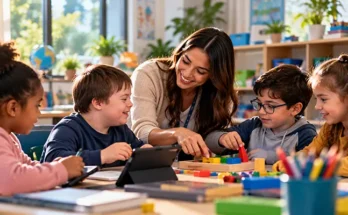
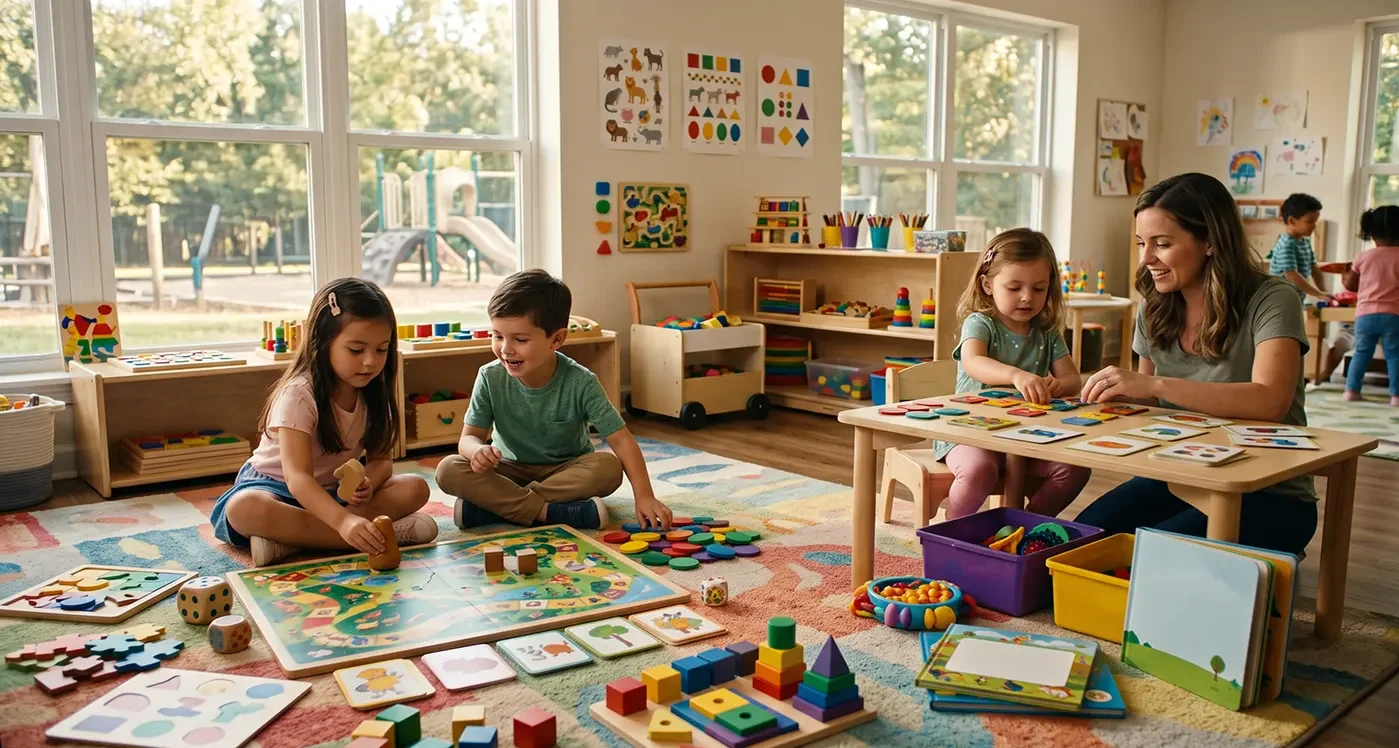
Special education educators play a vital role in helping students with diverse learning needs achieve academic success, develop social skills, and build independence. Unlike traditional teaching approaches that often follow a uniform curriculum, special education requires flexibility, patience, and a deep understanding of individual learning differences. The most effective teaching strategies used by top special education educators focus on differentiated instruction, individualized education plans (IEPs), and inclusive classroom environments. By combining evidence-informed teaching methods with individualized support, educators can create meaningful learning experiences that help every student participate, progress, and reach their potential.
1. Differentiated Instruction for Diverse Learning Needs
Differentiated instruction is one of the most important strategies in special education. It involves adapting teaching methods, learning materials, activities, and assessments to accommodate students’ different abilities, interests, and learning preferences. Rather than expecting every student to learn in the same way, effective special education teachers provide multiple pathways to understanding.
For example, a teacher introducing a science concept might combine visual diagrams, hands-on experiments, spoken explanations, and simplified written instructions. Students could demonstrate their understanding through a short presentation, a written response, a drawing, or a practical activity, depending on their learning needs and applicable assessment requirements.
Breaking complex assignments into smaller, manageable steps is another useful technique. Teachers can provide checklists, visual schedules, guided examples, and additional practice to help students understand expectations and complete tasks independently.
Assistive technology can further improve access to learning. Text-to-speech applications, speech-to-text tools, audiobooks, communication devices, and accessible digital resources can help students overcome specific barriers. Teachers should select these tools according to individual needs rather than assuming one solution works for everyone.
Effective differentiation does not mean lowering expectations. Instead, it involves providing appropriate support, adjusting how students access information, and offering achievable challenges that encourage continuous growth.
2. Developing and Implementing Individualized Education Plans (IEPs)
Individualized Education Plans, commonly known as IEPs in the United States, provide a structured framework for addressing eligible students’ educational needs. An IEP identifies relevant learning goals, required special education services, accommodations, and methods for monitoring progress.
Top special education educators use IEPs as practical teaching guides rather than treating them as administrative documents. They connect each student’s goals to everyday classroom activities and regularly evaluate whether instructional approaches are producing meaningful progress.
The IEP process typically involves collaboration among educators, parents or guardians, relevant specialists, and the student when appropriate. Depending on the student’s needs, the team may include speech-language pathologists, occupational therapists, school psychologists, and other professionals.
For example, a student who experiences difficulty with reading comprehension may have goals involving vocabulary development, identifying main ideas, and summarizing short passages. The teacher can incorporate targeted reading instruction, visual organizers, and regular progress assessments into daily lessons.
Progress monitoring is essential because students’ needs and abilities can change over time. Teachers should document performance, review assessment results, communicate with families, and collaborate with the IEP team when adjustments may be necessary.
It is also important to distinguish accommodations from modifications. Accommodations change how a student accesses instruction or demonstrates learning, while modifications change what the student is expected to learn. Both should be considered in accordance with the student’s documented needs and applicable educational requirements.
3. Creating Inclusive Classroom Environments
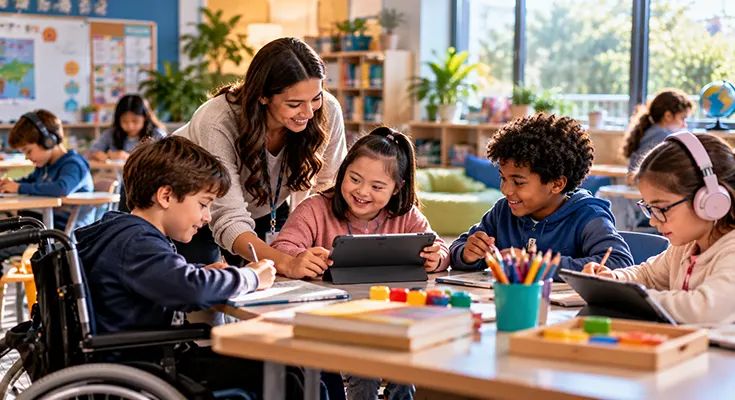
An inclusive classroom provides students with different abilities and learning needs opportunities to participate meaningfully in academic and social activities. Effective special education educators promote belonging by establishing respectful relationships, accessible learning spaces, and clear behavioral expectations.
One practical approach is Universal Design for Learning (UDL), a framework that encourages teachers to offer multiple ways for students to engage with content, access information, and demonstrate understanding. For example, providing captions on videos, using clear visual instructions, and allowing different response formats can benefit students with varied learning needs.
Physical accessibility also matters. Teachers should consider classroom layouts, movement pathways, seating arrangements, lighting, sensory demands, and access to learning materials. Some students may benefit from quiet workspaces, noise-reducing headphones, predictable routines, or scheduled movement breaks.
Positive behavior support is another essential component of an inclusive environment. Rather than relying primarily on punishment, teachers can identify the reasons behind challenging behaviors, teach alternative skills, reinforce positive actions, and establish consistent expectations.
Peer collaboration can strengthen inclusion as well. Structured group activities, peer partnerships, and cooperative learning projects help students practice communication, problem-solving, and empathy. Teachers should ensure that these arrangements promote genuine participation rather than assigning students with disabilities passive roles.
4. Building Strong Communication and Collaboration
Successful special education depends on effective communication among teachers, families, and support professionals. Regular discussions help educators understand students’ strengths, interests, challenges, and progress across different environments.
Teachers can share practical updates with families, invite feedback, and provide suggestions for reinforcing learning goals at home. Collaboration with general education teachers also supports consistent expectations and makes it easier to coordinate accommodations across subjects.
Professional development is equally important. Special education educators should continue learning about assistive technology, evidence-based instructional practices, disability awareness, and culturally responsive teaching. Reflecting on classroom experiences and reviewing student outcomes can help teachers refine their approaches.
Conclusion : The Effective Teaching Strategies
The effective teaching strategies used by top special education educators combine differentiated instruction, individualized education planning, and inclusive classroom practices. By adapting instruction, implementing meaningful IEP goals, using appropriate assistive technology, and fostering supportive learning environments, educators can help students overcome barriers and develop confidence.
Ultimately, successful special education is not about expecting every student to follow the same path. It is about recognizing individual strengths, providing appropriate support, and creating opportunities for every learner to make meaningful progress. Through collaboration, ongoing assessment, and a commitment to inclusion, special education teachers can help students build the academic, social, and independent living skills they need for future success.