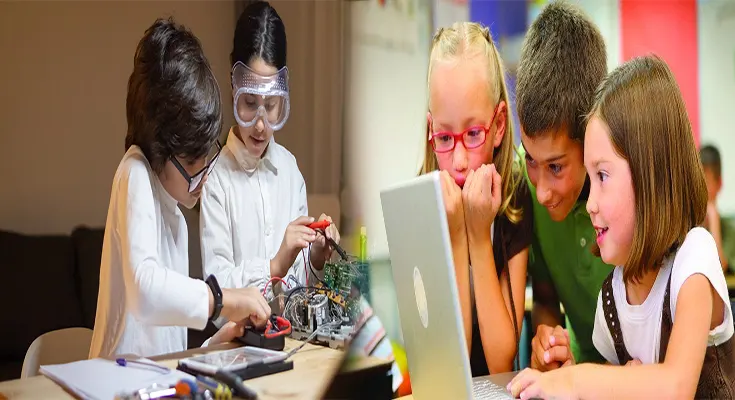


Computer-Assisted Instruction vs. Traditional Teaching: A Comparative Analysis

Computer-Assisted Instruction vs. Traditional Teaching: A Comparative Analysis

In the realm of education, the integration of technology has brought about significant changes in teaching methodologies. Two prominent approaches that have emerged due to technological advancements are computer-assisted instruction and traditional teaching methods. In this article, we will examine the key differences between these two approaches and explore their impact on student learning, engagement, and academic achievement.

Traditional Teaching Methods:

Traditional teaching methods have long been the foundation of education, characterized by face-to-face interaction between teachers and students in a classroom setting. In this approach, teachers deliver content through lectures, textbooks, and hands-on activities, with assessments often relying on written tests and assignments. The pace and style of traditional teaching are generally determined by the teacher, and students’ learning experiences are predominantly shaped by the teacher’s delivery and classroom activities.

Computer-Assisted Instruction:

Computer-assisted instruction (CAI) involves the use of computer technology to deliver educational content, guide learning, and assess …

Computer-Assisted Instruction vs. Traditional Teaching: A Comparative Analysis Read More
Project-Based Learning vs. Traditional Classroom Methods: A Comparative Analysis

Project-Based Learning vs. Traditional Classroom Methods: A Comparative Analysis

Education has evolved over the years, giving rise to various teaching methodologies aimed at enhancing student learning outcomes. Two popular approaches that have gained prominence in recent years are project-based learning and traditional classroom methods. In this article, we will delve into the key differences between these two methodologies and explore their impact on student engagement, critical thinking skills, and academic success.

Traditional Classroom Methods:

Traditional classroom methods have long been the cornerstone of education, characterized by a teacher-centered approach where the teacher imparts knowledge to students using lectures, textbooks, and worksheets. In this method, students are typically passive recipients of information, with limited opportunities for active participation and hands-on learning experiences. The focus is often on rote memorization and standardized testing to assess students’ understanding.

Project-Based Learning:

Project-based learning, on the other hand, is a student-centered approach that emphasizes active, inquiry-based learning. In this methodology, students work on real-world …

Project-Based Learning vs. Traditional Classroom Methods: A Comparative Analysis Read More
The Best Software for Computer-Based Education in 2025

The Best Software for Computer-Based Education in 2025

As technology continues to evolve, the field of computer-based education has experienced significant advancements. Students and educators alike are relying on innovative software to enhance the learning experience. In 2025, the best software for computer-based education is expected to revolutionize the way we learn and teach. Here are some of the top software options that are set to dominate the educational landscape in 2025.

Virtual Classrooms:

Virtual classroom software is anticipated to become even more sophisticated in 2025. These platforms will offer immersive environments that simulate traditional classrooms, complete with interactive whiteboards, real-time collaboration tools, and advanced video conferencing capabilities. Professors and students will be able to engage in discussions, access course materials, and participate in activities as if they were in a physical classroom.

Adaptive Learning Platforms:

In 2025, adaptive learning platforms will utilize artificial intelligence and machine learning to personalize the learning experience for each student. These platforms …

The Best Software for Computer-Based Education in 2025 Read More
Empowering Education: The Benefits of Self-Paced Learning

Empowering Education: The Benefits of Self-Paced Learning

In the realm of education, self-paced learning has emerged as a transformative approach that holds the potential to significantly enhance student performance. By allowing students to progress through educational materials at their own speed and on their own terms, self-paced learning empowers individuals to take control of their academic journey. In this article, we will delve into the ways in which self-paced learning improves student performance and contributes to a more effective and personalized educational experience.

1. Individualized Learning Paths

One of the key advantages of self-paced learning is its ability to accommodate varied learning styles and paces. Students have the freedom to navigate through course materials at a pace that aligns with their individual comprehension and mastery levels. This individualized approach allows students to spend more time on challenging concepts while progressing quickly through familiar topics, ultimately leading to a deeper understanding and retention of the material.

2. Reduced

Empowering Education: The Benefits of Self-Paced Learning Read More
Enhancing Engagement: The Impact of Computer-Based Learning

Enhancing Engagement: The Impact of Computer-Based Learning

In the digital age, computer-based learning has become an integral part of education, revolutionizing how students engage with and absorb information. The utilization of technology in educational settings has resulted in enhanced engagement, sparking enthusiasm and interest among learners. In this article, we will explore the ways in which computer-based learning improves engagement and contributes to the overall educational experience.

1. Interactive Learning Environments

Computer-based learning presents students with dynamic and interactive learning environments. Through the incorporation of multimedia elements, interactive simulators, and engaging visual aids, students are immersed in a captivating educational experience. This interactivity not only sustains students’ attention but also facilitates deeper comprehension and retention of the subject matter.

2. Tailored Learning Experiences

Technology allows for the customization of learning experiences to cater to individual student needs. Adaptive learning platforms can adjust the difficulty and pace of instruction based on a student’s performance, providing targeted support where …

Enhancing Engagement: The Impact of Computer-Based Learning Read More